Sound meditation

Sound you take part in

Gongs, bowls, flutes, harmonium and voice, played in a room you are lying down in. What follows is what those instruments do, why the tuning matters, and where to learn to play them.

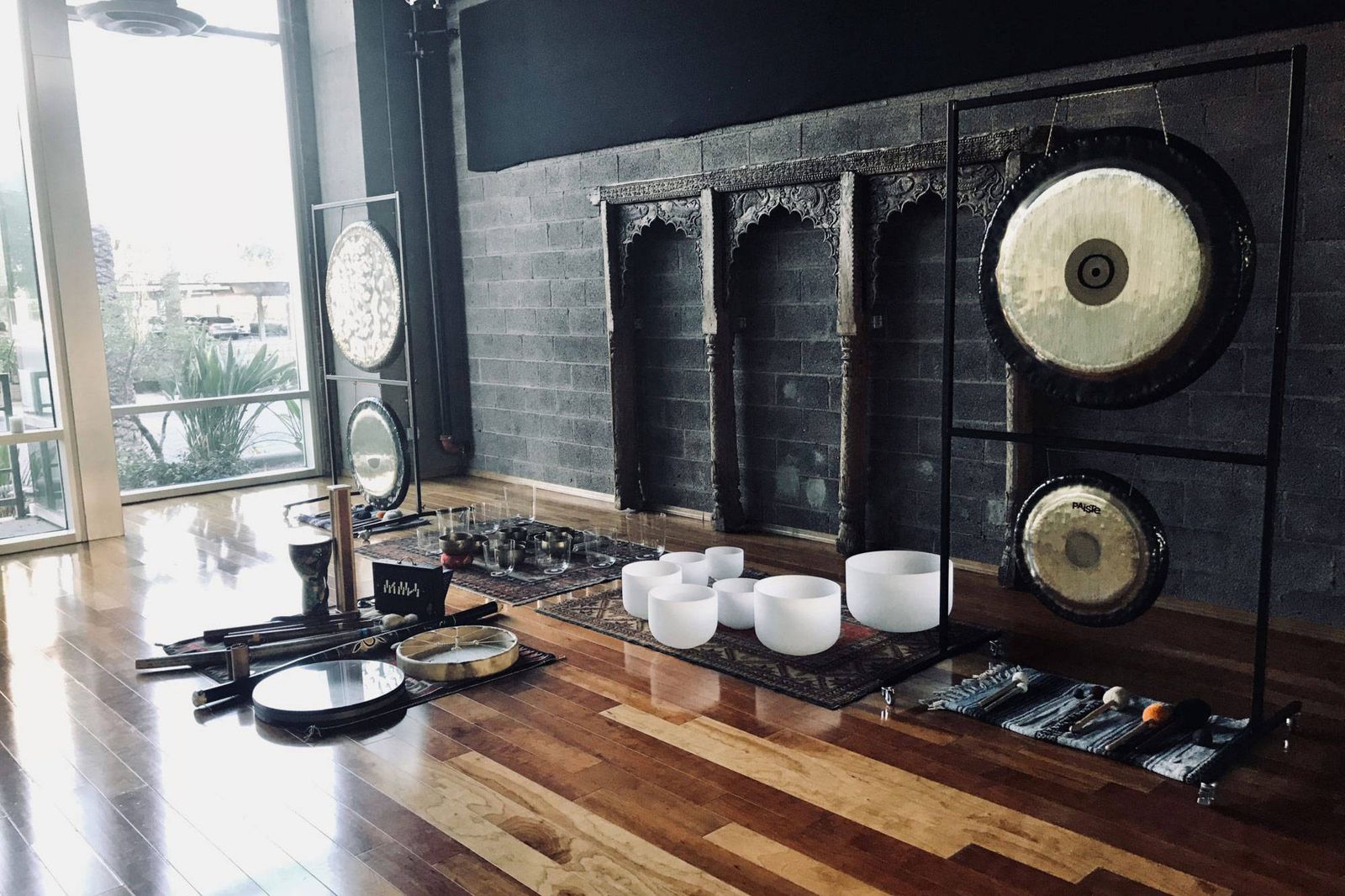
A studio floor with the whole set up laid out: two gongs hanging on stands, a row of crystal bowls, Himalayan bowls, a frame drum, didgeridoos and chimes on rugs

The name

Why Hamid calls it sound meditation

It is a branch of nada yoga, which is sound yoga. Sound is directed toward the body to move energy and settle the mind. Every guide uses different instruments and different techniques, and most of them lean on audible harmonic overtones, which are the part doing the work.

The same practice gets sold as a sound bath, a sound healing, a sacred ceremony. Those names describe a mood. They do not describe what is happening, which takes you as much as it takes Hamid. Nobody is bathing you in anything. You are meditating, and sound is the thing you meditate on.

That is also why the room is set up the way it is. You lie down, you shut your eyes, and you stay awake.

The word people use for this most often is sound healing, and there are good reasons not to.

Read the red flags

“Nothing here is done to you. You lie down, you stay awake, and you do the listening. The instruments are only very good at holding your attention while you do it.”

Hamid Jabbar

The instruments

What gets played

This is most of what turns up, though not all of it turns up at once. A gathering leans on gongs and bowls. A training covers the range of it, hands on, because the point is that you play them rather than watch Hamid play them.

Didgeridoo is the exception. It takes longer to get a sound out of than a weekend allows, so it gets introduced in the advanced training rather than taught from scratch.

Crystal bowls are the ones Hamid gets asked about most, and there is a lot about them that a photograph will not tell you.

Read what a crystal bowl is

In the room

Gongs

Symphonic gongs or tam tams, tuned gongs, Thai gongs

Bowls

Himalayan bowls and crystal bowls

Flutes

Native American style flute, bansuri, overtone flute

Drone

Harmonium and shruti box

Voice

Singing and overtone singing

Chimes and bells

In a good many varieties

Monochord

Didgeridoo

Drums

Learn it

Four ways to learn this

The same material, in different amounts, with different amounts of Hamid in it. Start wherever fits. The path runs from the online course to the in person training, then on to Level II or one to one mentorship.

01BeginOnline, at your own speed

Online, self paced

Online Sound Course

Over 20 hours of self paced video. Start today, work at your own speed, and arrive at an in person training already fluent in the theory.

Includesfourteen modules, thirty one videos and the training manual to keep. $298, once.

02DeepenIn person, in Arizona

Level I

Sound Practitioner Training

Thirty two hours in person, across two weekends. History, theory and practice, with real time on gongs, crystal bowls, Himalayan bowls, shruti box, flutes, chimes and overtone singing. Small group, in Arizona.

See the training
03ContinueIn a small group, or one to one

Level II

Advanced Level II

Forty hours for practitioners already working with sound who want to find their own voice in it. Capped at eight people, so nobody watches from the back of the room. This is where didgeridoo and the rarer instruments get introduced.

See the details

One to one

Sound Mentorship

Ongoing and one to one. Hamid takes practitioners already working with sound, and people who want to be, and builds the work around where you actually are. No fixed curriculum, no cohort, no set length.

Termsarranged individually, and confirmed in writing before payment.

Ask about mentorship

Graduates and mentees Hamid recommends, who have chosen to be listed, are in the practitioner directory. Yoga Alliance continuing education hours come with the in person programs, for anyone who needs the documentation for a studio or venue.

Beside the trainings

Come and listen, or read further

Gatherings

Lie down in the room

Most gatherings run about ninety minutes. No experience is needed, and nobody is watching you. Through the fall there is a monthly evening around the gong at Abundant Space in Scottsdale, 6:00 to 7:30pm, $44 suggested. Nobody is turned away for lack of funds.

See the calendar

Crystal bowls

What a crystal bowl actually is

Quartz bowls are sold with a lot of story attached to them. Hamid’s article is the part underneath the story: where they come from, what the marketing words mean, and how to tell one bowl from another with your ears.

Read about the bowls

Directory

Practitioners Hamid recommends

Graduates of his trainings and his mentees who asked to be listed, each with what they offer and how to reach them. A listing is his recommendation: these are people he would send his own friends to.

Find a practitioner

Sound Healing Red Flags

Five things worth noticing

Why Hamid calls it sound meditation and not sound healing, and four other things worth noticing in a practitioner or a training before you book. They look unrelated. They are the same problem five times.

Read the red flags
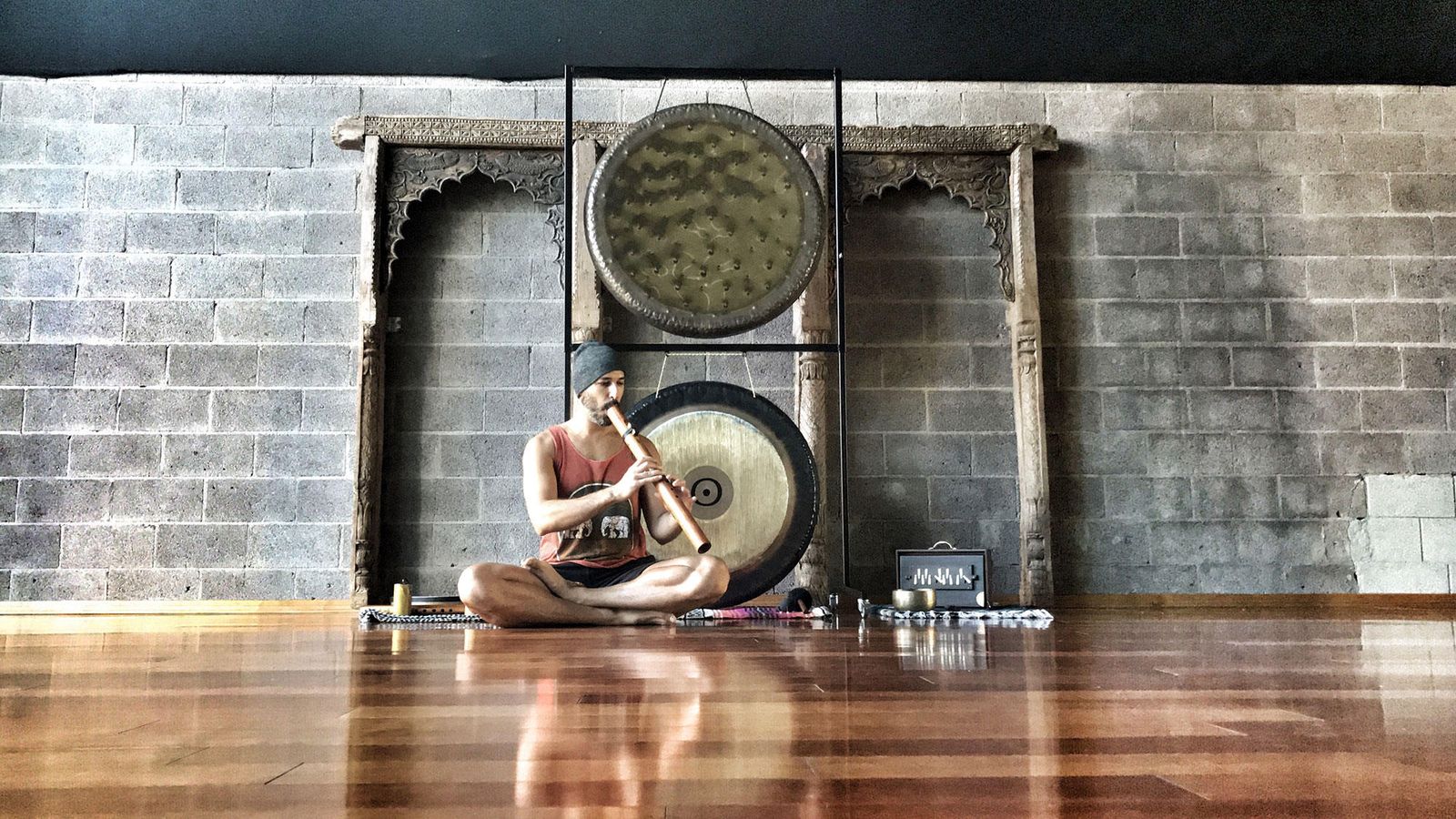
Hamid sitting cross legged on a studio floor playing a flute, two gongs on a carved wooden stand behind him

Tuning

Why the tuning matters

Most tonal instruments in the West are tuned to the equal tempered scale. A C major scale on a piano is equal tempered. It is a compromise. Each note is nudged off its natural harmonic ratio so that every key and mode works on the same instrument.

Before that compromise a tuning had to choose. Some intervals came out beautifully and others came out badly, and the bad ones were called wolf notes, because they howled. Eastern traditions largely kept those older tunings, and so did the West until about a hundred years ago.

Sound meditation wants natural harmonic intervals rather than equal tempered ones. Plenty of what Hamid plays is equal tempered anyway, including Native American style flute, harmonium and crystal bowls. There are ways of playing them that bring the natural overtones out, and a good facilitator ends up doing it whether or not they know the theory, because it sounds more meditative.

The voice is the interesting case. People do not naturally sing in equal temperament. Hold a sustained note over a shruti box or a harmonium or a bowl and the harmonics build on their own.

Overtones

What a gong actually does

Single note instruments get their power from the fundamental. Gongs and Himalayan bowls work the other way around. Struck dead center with a small mallet a gong has a fundamental too, but as the vibration travels across that much metal, overtone after overtone comes up out of it.

What you get is usually described as a wall of sound. There is a root tone in it and you can find it if you listen for it, and above that there is more going on than you can count. It settles most people faster than they expect it to, which is why the gong sits at the center of what Hamid does.

There are many kinds.

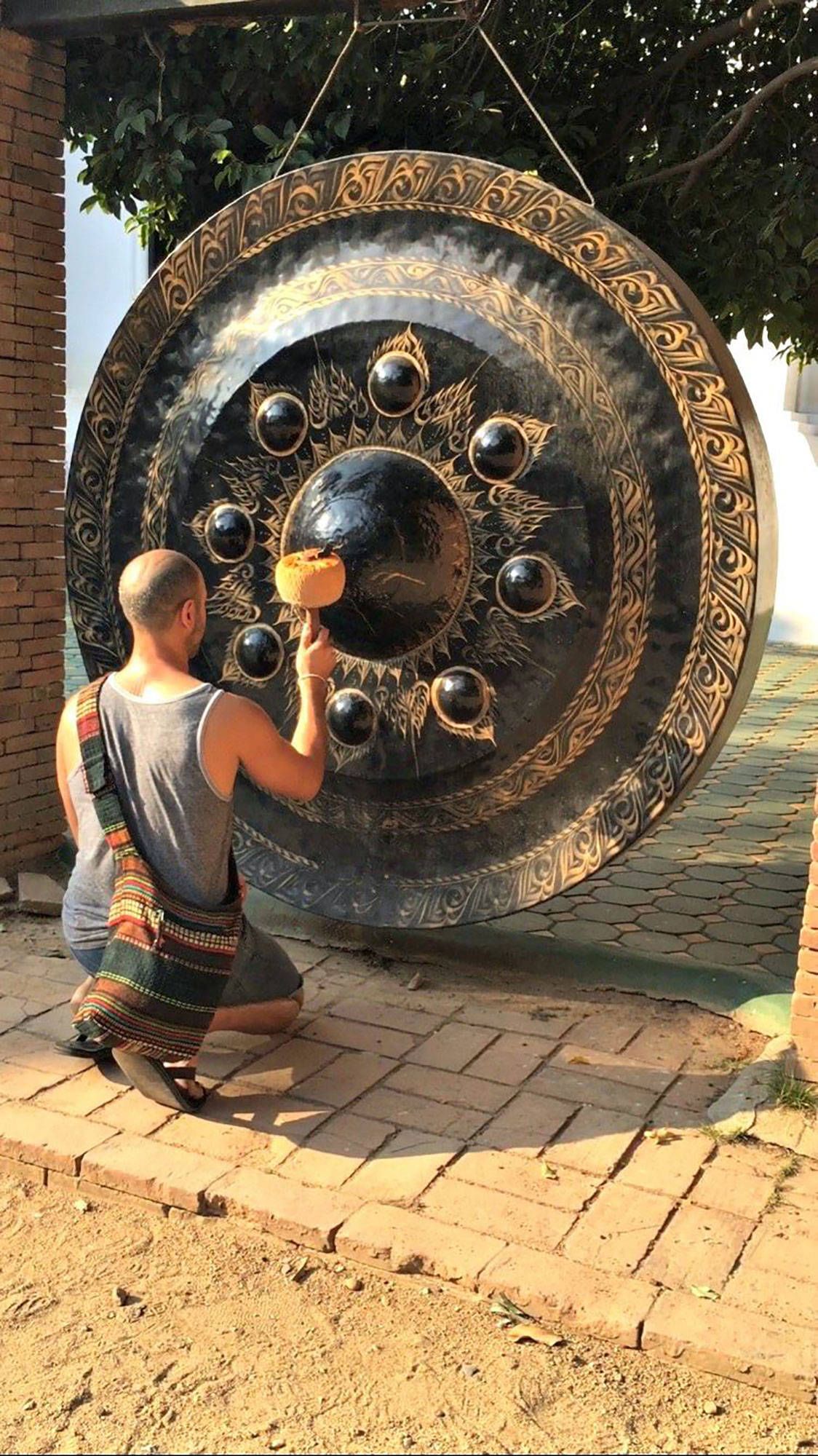
Thai gongA raised boss in the middle. It rings almost like a bell, with one clear pitch.
Symphonic gongAlso called a tam tam. It spreads much wider, and it is the kind most people in the West have heard.
Tuned gongIts own thing again.
Hamid kneeling to play a large ornate Thai gong hanging outdoors, its face covered in raised bosses and carved detail
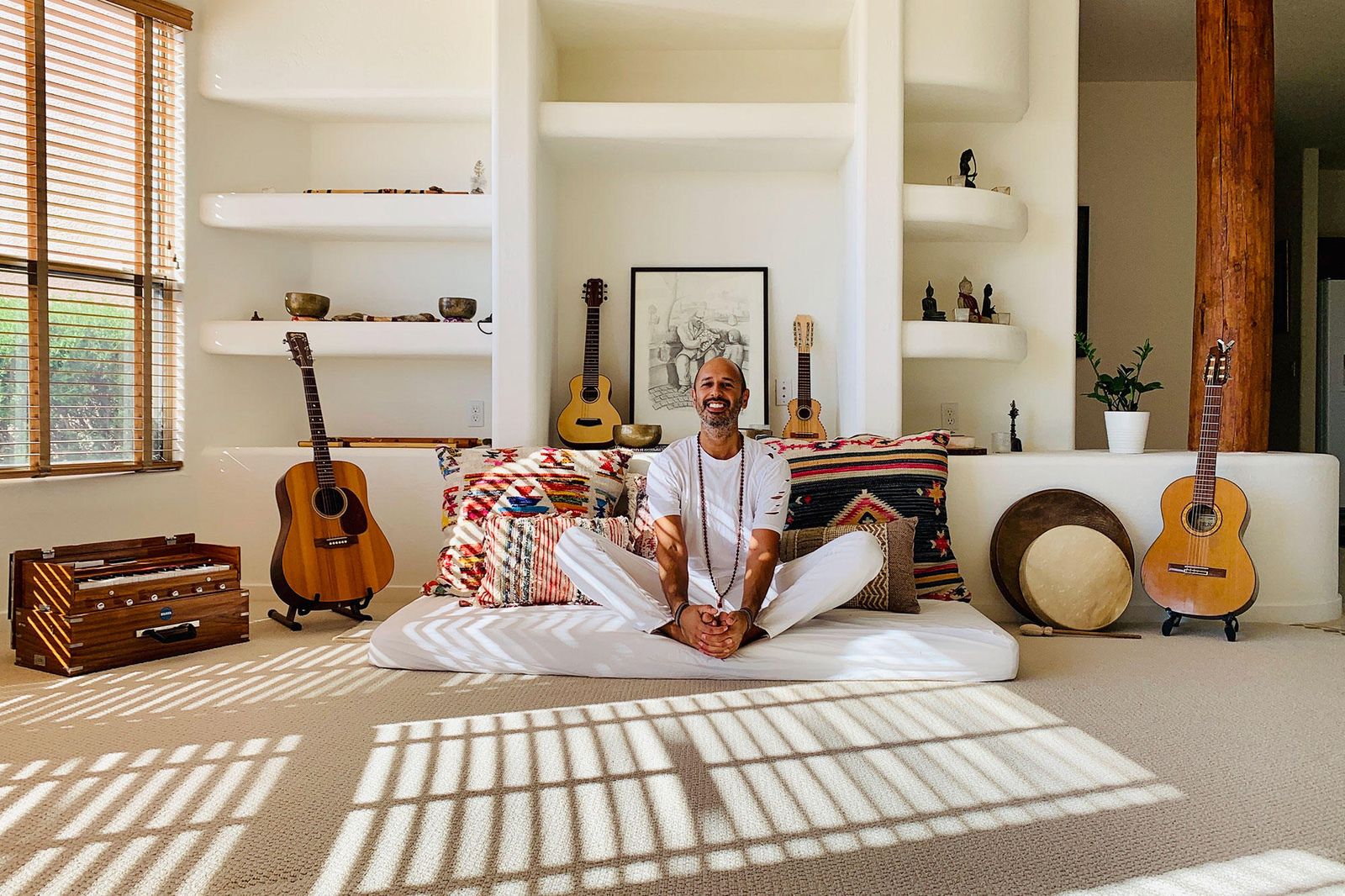
Hamid sitting cross legged in a sunlit room with a harmonium, three guitars, a frame drum and singing bowls around him

How it has changed

It has become more musical

Everything above is how Hamid would have explained this work ten years ago, and the acoustics have not changed since. What he does with them has. More of a session now is played rather than sounded. Harmonium underneath, voice on top of it, flute lines, guitar.

Some of that is the recording work feeding back into the room, and some of it is just what happens after enough years. A gong still opens and closes most of what he leads. There is more music in between than there used to be.

Hear the music

Come and see

Reading about it only goes so far

The quickest way to find out whether this is for you is to lie down in a room while it happens. Gatherings run around the Phoenix area most months.

To start by listening instead, the recordings are on the streaming services.